





Robotics as an alternative to human labor is not a new concept, however, there has been a distinct rise in businesses turning to these technological solutions over the last few years. In the latest update, Hyundai has unveiled plans for humanoid robots to take over some of the “dangerous” production jobs across its factories, presenting its “Partnering Human Progress” strategy during the Consumer Electronics Show 2026 (CES 2026) in Las Vegas.
Atlas, developed by Boston Dynamics, is a new human-like robot that is expected to see deployment across Hyundai factories in 2028, including at a plant in Georgia, US, which witnessed a very public immigration raid late last year. The role of robots in labor automation is often seen as a sign of progress for businesses that want to increase safety standards and decrease their reliance on human labor, which is often more fallible. On the other hand, it does bring up interesting questions about labor management and its impact on the workforce.
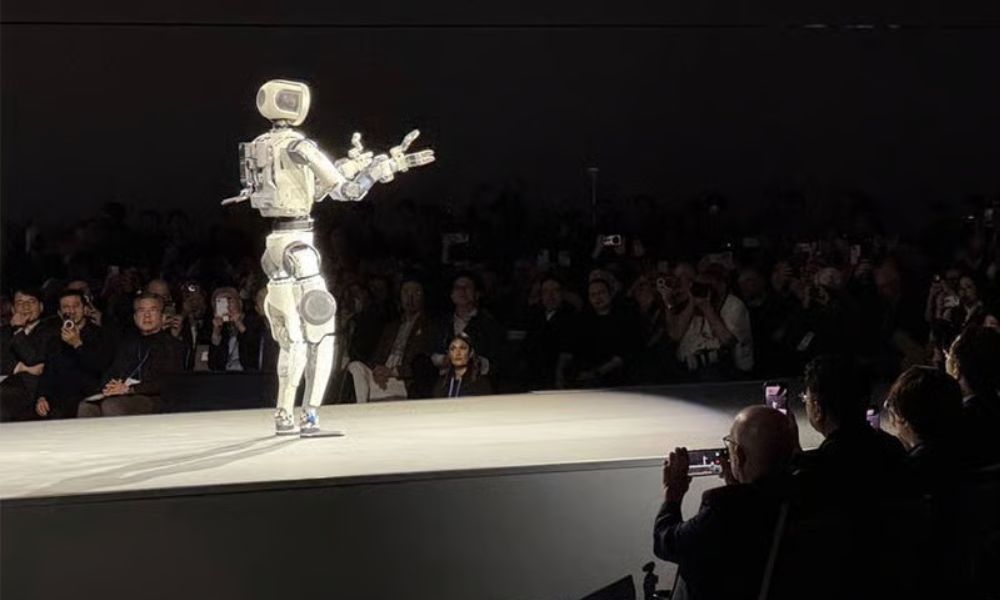
Hyundai’s humanoid robots showcased at CES 2026 wow the tech industry, but the implications for the workforce are considerably more dire. (Image: Hyundai Motor Group)
Hyundai’s Humanoid Robots Bring Us One Step Closer to a Future That Is Largely Automated
Sci-fi books and movies have often shown us just how the world could take shape when it was powered by robotics, and despite their cautionary messaging, the technology has made an unregulated appearance across industries. Hyundai Motor Group, a leading company in the field of locomotion and tech, has invested heavily in automation, even purchasing a significant stake in Boston Dynamics, the makers of these advanced robots.
The partnership also involves collaboration with Google’s DeepMind to construct the AI core of this autonomous robot technology. According to Hyundai’s robotics plan, the company hopes to “integrate Atlas across its global network,” intended to ease the physical strain on human workers and handle some of the more dangerous tasks that come with working in factory roles.
The company’s news on its humanoid robot deployment did not come with an estimate of just how many robots will be put into action and what their specific roles will be. Still, the strategy is expected to go into effect in 2028. The timeline aligns with plans to build a factory capable of manufacturing 30,000 of these robots annually by the same year. There is some irony in workers building their replacements, but the ground realities remain unchanged.
What Will Hyundai and Boston Dynamics’ Robotic Deployment Look Like in 2028?
A preliminary version of the robot is already under development and will make an appearance in 2028, aiding the organization with automobile assembly. Reuters confirmed that the robots will initially be used for parts sequencing tasks as their safety and quality are assessed and approved for expanded use. By 2030, these robots could expand towards component assembly roles, taking on work that involved heavy loads, repetitive motions, and further complex actions over time.
Vice chair Jaehoon Chang spoke during the CES presentation on the Hyundai humanoid robots, acknowledging that workers could lose their jobs as a result of this change. He also added that human labor would still be essential in the training and maintenance of these humanoid robots.
The specs and build of the robots are certainly impressive and far exceed the quality of robotics technology we’ve seen from competitors like Tesla. The efficiency does make predictions of a full robotics takeover in the coming years more realistic.
Hyundai’s Robot Factories and Plans Are Not Emerging in Isolation
Hyundai and Boston Dynamics’ robot deployment strategy may just be the latest and most advanced showcase of just what can be achieved with this technology, but they aren’t the only businesses looking closely into automation.
Amazon has been rumored to have plans to replace 600,000 workers with robots by 2033, taking its currently advanced automation setup even further than predicted. The company is also leading the tech industry’s preoccupation with drone deliveries and on-ground robot services for package drop-offs, making its proficiency in the area well-known.
Tesla’s humanoid Optimus robot is similarly being tested out in factories, with pilot programs to assess its capabilities currently underway. Other major industrial robot manufacturers like Yaskawa and ABB have long been endeavoring to bring robot workers to US factories as well.
What Does This Humanoid Robot Industry News Mean for the Workforce?
Technological threats to the workforce have always loomed strong, and each year brings us closer to increased automation. The advancements made in AI have further expanded the capabilities of robotics, enabling us to operate autonomously with greater ease. Hyundai’s humanoid robots are not expected to fully revolutionize its workforce until 2028, and crossing that point will not mean a complete redundancy of the human labor force either. Despite these reassurances, the workforce remains strained by the future of work.
Automation not only threatens jobs but also introduces the possibility of worsening wages and benefits for workers. “Employers want workers who won’t complain, tire, or ask for more rights. These robots are solely for their benefit, and excuses of safety aren’t convincing when little is done to improve working conditions right now,” a factory worker from Georgia told The HR Digest. Such sentiment has been commonly expressed by workers, who do not believe that safety standards are going to see much improvement following the introduction of robots for labor automation.
Labor unions have frequently expressed their frustrations over companies competing to replace them, demanding long-term protections to ensure they have jobs to return to. From dock workers to those deep in the warehouse stacks, many have begun to ask for promises of job security. Hyundai Motors’ Kia Corp saw similar efforts to organize and address labor rights issues in the era of AI last year.
The Humanoid Robot Deployment News Means More Work for HR
It might be easy to mistake news from the humanoid robot industry as a tech concern rather than a matter of relevance to HR, however, workers will still continue to be crucial to the workplace for the next decade at least. The combined forces of HR and tech are expected to be essential to manage the incoming reign of AI, regulating both real and digital workers with equal consideration. Regulatory changes to ensure the use of technology within the organization is managed are also up to both the CHRO and the CTO.
Providing reassurances to workers and addressing their concerns surrounding the future of employment also falls to HR. With increased tensions within the workplace, it can be much easier for conflict to break out and employees to become more territorial about their jobs and roles. Issues of gatekeeping knowledge have already begun to show, and within settings that rely on dangerous heavy machinery, this can be particularly worrying.
As union labor moments continue to grow and workers organize to represent their own interests, the pressure on HR to communicate business decisions and intentions to workers will only grow stronger. The Hyundai humanoid robots mark a win for the field of tech and automation, however, there is still work to be done on assessing their real-world impacts on the workforce.
What do you think of the Boston Dynamics-Hyundai humanoid robots and their implications for the future of work? Share your thoughts with us. Subscribe to The HR Digest for more insights on workplace trends, layoffs, and what to expect with the advent of AI.