





After years of stalled negotiations, the Starbucks workers’ union strike has been scheduled for November 13 if the company does not finalize a contract by the deadline. Set to coincide with the company’s annual Red Cup Day promotional event, Starbucks Workers United has authorized a strike to urge the coffee giant to present workers with a contract that meets their demands sufficiently. The Starbucks union’s open-ended strike could be extremely damaging to the organization at a time when the business is hoping for a sales spike, but it’s unclear if the organization will finally submit to union demands.
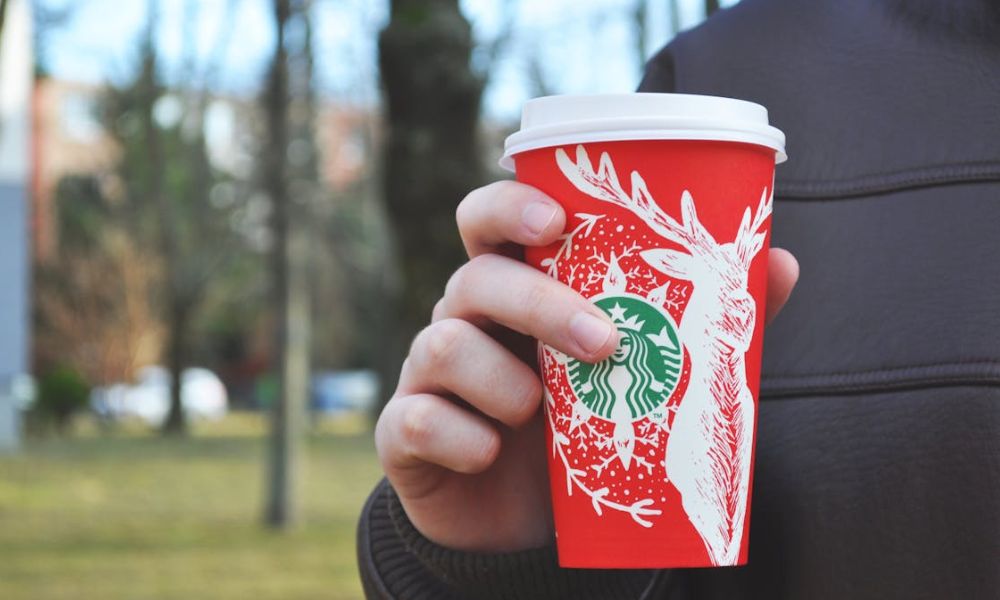
The Starbucks union’s strike, authorized by 92% of union members, will coincide with the Red Cup Day event unless a contract is reached. (Image: Pexels)
No Contract, No Coffee: Starbucks Union Strike Authorized
On Wednesday, 92% of Starbucks baristas voted in favor of authorizing the strike, showing their support for a movement to push the business to formalize a contract or face the consequences of failure. The Starbucks union strike is scheduled to begin on November 13 and could affect outlets in 25 US cities. Later expansions to other regions are also expected, however, no concrete details are available.
The Starbucks Workers United union has maintained its demand for a contract from the organization for years now, and when matters slowly appeared to be drawing close in 2024, CEO Laxman Narasimhan was ousted and replaced by Brian Niccol.
New CEO Niccol has made repeated announcements to prioritize the company’s frontline workers, making changes to the training and benefits offered to the green-aproned baristas. However, there have been no signs of a union contract.
The Starbucks Baristas’ Strike Aims to Disrupt Busy Holiday Season Sales
November 13 also marks the same day that Starbucks is planning to organize its Red Cup Day event, which first began in 2018. As part of the celebrations for the upcoming holiday season, the company traditionally gives away a free limited-edition reusable holiday cup with the purchase of a holiday drink.
The event pulls in a bigger crowd than usual, allowing the business to capitalize on the increased traffic while promoting its lineup of handcrafted holiday drinks alongside new and returning treats. Not only would the event be affected by the disruption, but the Starbucks union’s open-ended strike could eat into profits over the upcoming holiday season.
Baristas previously chose the same event for a strike back in 2023, followed by another strike during the Christmas period in 2024.
Starbucks’ Open-Ended Strike Among Baristas Has Been a Long Time Coming
Starbucks is no stranger to accusations of union busting, despite which over 550 of the company’s 10,000 company-operated U.S. stores have managed to unionize. The Starbucks Workers United union represents over 9,000 workers of the company’s over 200,000 baristas. While more stores have attempted to join the movement since 2021, the company has resisted, allegedly closing 59 of the unionized outlets in September.
The company pointed to restructuring goals as the reason for the decision, however, union members who have still been unable to bring the organization to settle on a labor contract remain certain that other reasons lie at the heart of the decision. The union has reportedly filed over 1,000 charges against the coffee maker over allegations of unfair labor practices with the National Labor Relations Board (NLRB), with varying results.
The Starbucks Baristas’ Union Fight Grows Serious
So far, both the warring sides have blamed the other for the stalled negotiations. While Starbucks has not released any statements on how it might be affected, a spokesperson told USA Today that the organization was disappointed by the Starbucks union’s decision to invoke a strike. “When they’re ready to come back, we’re ready to talk,” the spokesperson stated.
The organization has previously dismissed the union’s demands as unserious, dismissing the proposed terms such as a 65% immediate pay increase, along with a 77% increase over three years. The union has also demanded additional payment for weekend and promotion days, followed by changes to the mobile ordering system during high-demand periods for an outlet. Starbucks also stated that “any agreement needs to reflect the reality that Starbucks already offers the best job in retail.”
Jasmine Leli, a Starbucks barista from Buffalo, retorted in a similar vein to The Guardian, “Our fight is about actually making Starbucks jobs the best jobs in retail. Right now, it’s only the best job in retail for Brian Niccol.” Employees continue to hold their ground, levying accusations of unfair labor practice charges against Starbucks, demanding that the company make changes and present them with a fair union contract.
What’s Next For Starbucks?
The coffee retailer has not provided any indication that it plans to interrupt the Starbucks baristas’ union fight or plans to strike. It appears unlikely that the company will return with a contract by the deadline set for next week, making the strike a near certainty. Starbucks is also looking at layoffs within its organization, further complicating relations with employees. The impact of Starbucks’ job stoppage during the holiday season may not be significant, depending on the traffic the business receives for its event, however, a prolonged strike is never good for business.
From the ongoing Boeing defense workers conflict to accusations of union busting levied against Rockstar Games, a range of industries are witnessing workers attempt to unionize and see collective bargaining benefits to represent their interests. Now, the terms of employment do vary from business to business, but there does appear to be a general sense of dissatisfaction among workers who remain at odds with their employers. Addressing employee satisfaction is a key aspect of securing engagement and productivity, which suggests that much needs to change in the world of employment.
Have insights to share regarding the Starbucks union strike? Share your thoughts with us. Subscribe to The HR Digest for more insights on workplace trends, layoffs, and what to expect with the advent of AI.