


There are many well-trodden pathways towards employee recognition, but one that is seldom appreciated or utilized effectively is employee gifting. Everyone likes being on the receiving end of recognition, but in the corporate space, it’s not often that we think hard about what exactly it is that’s changing hands. A generic gift may elicit a muttered thanks, but if it does not evoke individual satisfaction or company pride, then the gift may have failed to serve its purpose.
Earlier this year, Forbes announced that employee gifting is slowly shaping up to be a serious retention strategy, and there is good cause for the adoption of such a mindset. While we can all agree that acknowledging these moments is important in the workplace, many organizations struggle with corporate gift ideas and how best to approach them.
Branded product agency LR Paris is redefining corporate gifting beyond fleeting trends and bland rewards, and its Chief Executive Officer, Francis Pierrel, can speak to what it means to get employee recognition right.

Employers often treat employee gifting like a passive process, but a sprinkle of intentionality can make all the difference to the workforce. (Image: Freepik)
In 2026, It’s Time to Think More Seriously About Employee Gifting
Employees are compensated for their contribution to an organization through their pay and performance bonuses, but there is an unspoken understanding that exceptional performance is deserving of additional recognition. This is where having a set idea of rewards and bonuses can best help an organization, but it isn’t the only occasion where there is good cause to celebrate.
Work anniversaries, holidays, organizational milestones, and other similar occasions are sweetened by acknowledgement, and not only does this serve the purpose of uplifting the employee, but it also builds engagement.
When it comes to corporate gifting, it can be very easy to get lost in its transactional nature. It often leaves the employer sheepishly handing out water bottles simply plastered with the company logo as is, while employees immediately stow them away for future use. There is absolutely nothing wrong with a water bottle; it serves a very important purpose in the life of the employee, but when it looks and feels like something that emerged out of a desire to get this task done with, the message behind the gift becomes abundantly clear.
This form of employee gifting does help with increasing the employer-employee interaction to a degree, but it doesn’t necessarily improve the quality of the relationship between the two. Meaningful gifting can make all the difference, even taking something with the employer branding to a more sophisticated and artful place that the employees feel glad to represent.
The Experts Chime In: LR Paris CEO Francis Pierrel Dives Into the Morale-Boosting Powers of Employee Gifting
Happy employees are productive employees, and many elements contribute to this workplace happiness. Much as we all love to buy ourselves a little pick-me-up every once in a while, congratulating ourselves with a sweet treat or an indulgent coffee order for surviving a difficult day, appreciation often lands better when it comes from someone else. This is why being intentional rather than settling for a perfunctory attempt at corporate gifting can make a world of difference.
Many employers indeed recognize the value of a gift, but a similar number struggle with the art of gifting. Fortunately, there’s a lot we can learn from those who have not only understood the right ethos behind workplace rewarding, but also the method to getting it right.
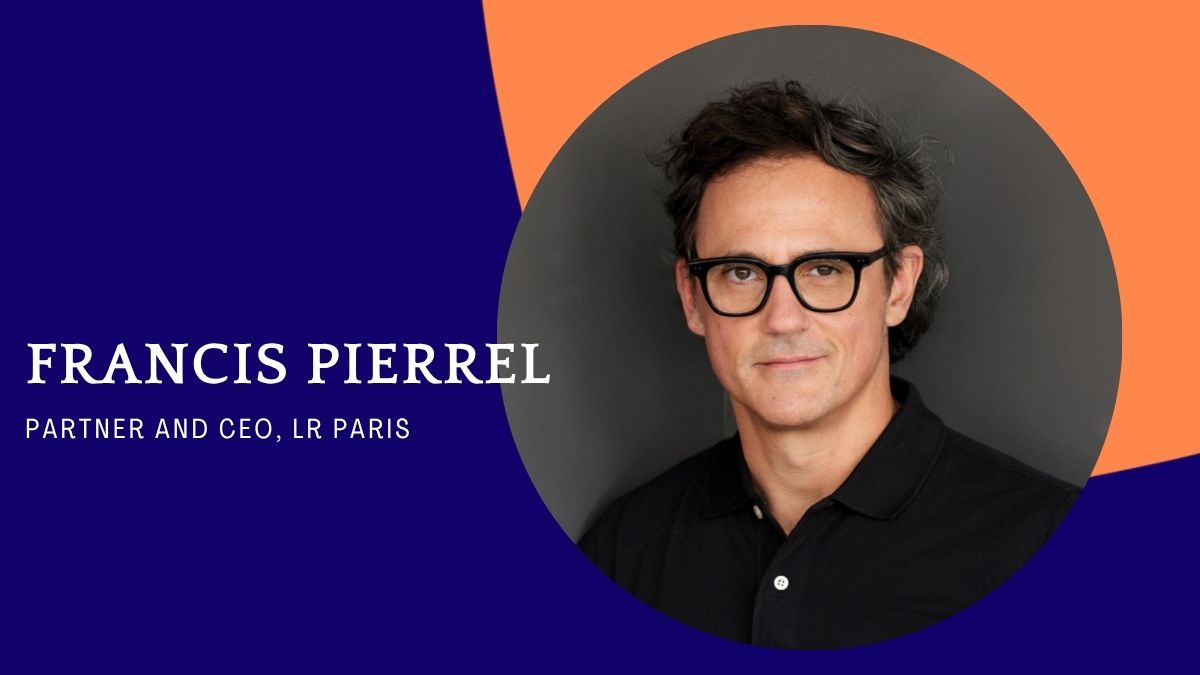
Francis Pierrel, Partner and CEO at LR Paris, is redefining what it means to tie a message and a purpose to a product. Applying a B2C level of excellence to the promotional B2B marketing industry, he isn’t just helping brands embrace their identity with their customers, but with their employees as well.
Following a long and fruitful career as CEO and Brand President of some of the world’s most iconic fashion brands, including Ralph Lauren, Diesel, Lacoste, and Urban Outfitters, Pierrel now stands at the helm of LR Paris, channeling his insights into leading the third-generation branded product agency, while also taking some time out to talk to us about the essence of workplace employee recognition.
The HR Digest: To you, what does employee recognition mean, and what role does company gifting have to play in making that recognition feel worthwhile?
Francis Pierrel: Recognition is simple. It’s saying “I see you,” and meaning it. The problem is that most companies say it with words, then undermine it with the object. You can write the most thoughtful email, give the most genuine toast in a team meeting, but if the gift that comes with it is something the person would never choose for themselves, the object contradicts the words.
I spent 25 years at Ralph Lauren, Lacoste, and Diesel, where we understood that every physical detail carries meaning, the fabric, the stitching, the weight of a bag in your hand. Corporate gifting works exactly the same way. The gift is the message. Done with care, it reinforces recognition. Done generically, it quietly says, we checked a box.
That’s the instinct I brought to LR Paris, treating a recognition gift with the same intentionality a fashion house brings to a flagship collection. Gifting doesn’t replace recognition. It makes it tangible. It gives it weight, literally. And a well-designed gift stays on someone’s desk long after the moment has passed. That’s something an email can’t do.
The HR Digest: Employers recognize that there is no single gift or reward that will satisfy all workers, so they settle on a generic offering that they “can’t go wrong with.” Is there anything you would say to change that mindset?
Francis Pierrel: I’d say this. You absolutely can go wrong with generic. You just don’t hear about it. Nobody walks into HR and says, “That branded backpack made me feel invisible.” But they feel it. And they carry that impression with them about the company, about the culture, about how much their work actually matters.
The mindset shift isn’t about finding one perfect gift. It’s about designing with your brand’s identity at the center. At LR Paris, we don’t start by asking what product we should make. We start by asking who this company is and what we want someone to feel when they hold this.
That changes everything. Because now the gift isn’t generic, it’s specific to your brand. And when an employee receives something that clearly came from thought rather than a catalog, they notice. They always notice.
You don’t need a hundred different gifts for a hundred different people. You need one that feels unmistakably yours, something you’ll want to display at work or at home, with a kind of quiet pride that says: I work for a company that sees me, that considers me. And that’s when loyalty stops being transactional. That’s when the job becomes more than a job.
No employer hires and keeps someone they don’t consider a talent. So why would the gift say otherwise? The product is the cherry on the cake, but the cherry still has to do its job.
The HR Digest: Organizations often take external product branding seriously, but not so much the internal branding and image it creates for employees. Do you think this is something that we should see getting more attention in the workplace?
Francis Pierrel: Absolutely. And it’s one of the biggest missed opportunities I see. Companies will spend millions making sure every customer touchpoint is perfect: the website, the packaging, the retail experience, the ad campaign. Every pixel is considered. But the physical products they put in their own people’s hands? That’s often an afterthought.
Here’s why the gap exists, and it’s not because HR doesn’t care. HR people are full of talent, but they’re not marketing people, brand people, or product people. Yet somehow they’re expected to do all of it—merchandising, design judgment, quality control, production follow-up—for an internal product, on top of their actual job. That’s an unreasonable ask, and it’s exactly why the discrepancy is so wide.
It gets harder for service brands. A bank, a law firm, a tech company—they don’t have a tangible expression of their brand the way a fashion or beauty company does. So when they need a product for a gift, there’s often no one internally to even ask. No design team to turn to. No product instinct to lean on. They’re left guessing.
That’s precisely why LR Paris exists. We’re not a vendor you call for a quote. We function as the design and production team, a company doesn’t have time to build in-house, or was never going to have in the first place, supporting from concept through execution, like an extension of your own team.
Your employees are your first audience. They’re your most important brand ambassadors. It shouldn’t be a radical idea to treat them like one, but for most companies, without the right support, it still is.
The HR Digest: What is one thing that employers often get wrong about corporate gifting? Conversely, what is one organization or industry that gets it right?
Francis Pierrel: What most employers get wrong is treating gifting as a procurement task instead of a brand moment. The gift gets ordered the way you’d order office supplies: fastest option, lowest price, logo on it, done. There’s no brief, no story, no connection to the company’s identity. Then everyone wonders why employees don’t seem to care about the gift.
The moment someone asks, “Does this reflect who we are?” before signing the purchase order, the entire outcome changes.
As for who gets it right, the beauty industry is ahead of almost everyone. Beauty brands understand that a gift-with-purchase isn’t a freebie; it directly drives sales. So they invest in its design the same way they’d invest in the product itself.
That’s the model every industry should borrow. A gift that gets it right isn’t just picked, it’s designed or redesigned to be on brand. It has to serve the message HR is actually trying to send, whether that’s recognition, belonging, or pride; not just to carry a logo. And the logo itself has to be placed with intention, in a way that serves both the brand’s image and HR’s purpose, instead of being slapped on as an afterthought.
That’s the difference between a gift that represents the company and one that just wears its name.
The HR Digest: We heard mention of five employee gifting moments every company should be designing for. What would you say those are?
Francis Pierrel: Most companies operate around four gifting moments, and they’re all important.
The first is onboarding: the welcome kit. It’s an employer’s first physical brand impression, and it sets the tone for the relationship. Get it right, and you start the job with a feeling of pride. Get it wrong, and the employee is already wondering what else the company cuts corners on.
The second is the intern program. This matters more than people realize. The intern sitting at a new desk this summer is forming an opinion about your brand in the first five minutes, and in a few years, they’ll be the ones making decisions about how the company shows up in people’s hands.
The third is anniversaries, which could be tenure recognition or work milestones. Moments to pause and say: your time here has mattered.
The fourth is calendar moments. Holidays, cultural celebrations, and company milestones. Well-established, expected.
But the fifth one is the one I care about most, and it barely exists yet. We call it the Fifth Gift. It’s the unexpected recognition moment: a beautifully designed thank you that arrives when nothing is on the calendar. No anniversary, no holiday, no occasion. It just says, “I see what you did, and it mattered.”
I’ve used this idea throughout my career, with my own teams and as a retention tool with clients. And what I’ve noticed is this: people love gifts, but they almost never ask for one. They’ll ask for a discount. They’ll ask for a raise. They rarely ask for a gift, which is exactly what makes it land so differently when it arrives unprompted. It bypasses the negotiation entirely and goes straight to the feeling.
Five moments, five chances to say something an email never quite can. Get all five right, and gifting stops being an HR line item; it becomes part of how people experience working for you.
The HR Digest: With the climate in the workplace today, boosting employee morale has perhaps taken a back seat at many organizations. From your experience, what could encourage employers to bring it back to the forefront and really start to think about retention via thoughtful gifting?
Francis Pierrel: The data already makes the case. Employees who feel appreciated stay longer, and non-monetary recognition consistently outperforms cash bonuses. The evidence is there.
But data doesn’t change behavior. Seeing what good looks like does.
Remote work changed the equation. When you’re remote, you’re removed from the culture: no hallway conversations, no shared energy in a room. A well-designed gift becomes the connector, the one physical thing that still reaches someone’s kitchen table and says something real.
At the office, it plays a different role. You want people to feel part of a team, and a shared gifting moment of everyone receiving the same thoughtfully designed piece becomes the common point that seals it.
My advice: start small. Pick one moment and redesign it with real intention. The results will justify doing more.
The HR Digest: For employers who want to put these insights to work, are there certain factors that take a gift from a generic offering to one that creates a lasting impression on employees?
Francis Pierrel: Four things make the difference. First, plan ahead. The biggest killer of creativity is a deadline that’s already too late. When you start thinking about a gifting program in advance, ideally mapped around the five occasions: onboarding, internships, anniversaries, calendar moments, and the unexpected Fifth Gift, you give yourself room to be bespoke instead of generic. Last-minute gifting is how companies end up buying whatever’s in stock. And the receiver can always feel it.
Second, start with the brand, not the product. The most common mistake is browsing a catalog and picking an item. That’s backward. Ask what you want someone to feel when they hold this, and what your company stands for. When the process starts with the brand instead of the product, the result feels intentional. Because it is.
Third, invest in the experience around the product, not just the product itself. How something arrives matters. How it’s packaged matters. A thoughtfully wrapped, beautifully presented gift at a modest price point will always outperform an expensive product tossed into a shipping box. Details don’t equal expense. Intentionality does.
Fourth, make it something worth keeping. If the recipient wouldn’t choose to keep it on their desk or in their home, it hasn’t done its job. Every branded product is an ad you’re already running. Make it one worth remembering.
And honestly, this is exactly what we do at LR Paris. We plan it, design it, make it bespoke, and we work with your budget, not the other way around. Call us, and you’ll impress your talent and your finance team at the same time.
The HR Digest: What are some of the most memorable corporate gifting projects that LR Paris has brought to life? I’m sure our readers would love to hear examples of unique gifting efforts that resonate with them and showcase just how much space there is to be creative with this.
Francis Pierrel: Range is the point. I could give you fifty examples, but three stick with me because they show how differently “creative” can look depending on the brief. Honestly, the best way to see that range is to walk through it. We have HR teams visit our showroom all the time to get inspired for their next project, often before they even have a brief in mind.
The first is a loyalty program for one of the world’s largest hospitality brands. When a member reaches their highest tier, they receive a custom welcome gift: packaging engineered to survive international shipping, verified addresses, individually shipped at a scale of roughly 100,000 units a year. It sounds like logistics, and it is, but the member just sees a beautiful gift that makes them feel valued. That’s the paradox of gifting at scale: the more complex the operation behind it, the simpler the feeling has to be on the other end.
The second is an influencer seeding kit we designed for one of the world’s largest beauty companies: around 1,660 kits shipped across 17 markets. We introduced presentation formats they’d never used before, borrowed from completely different industries. The reaction was immediate: “Where has this been?” That’s the advantage of working across verticals. We bring ideas from hospitality into beauty, from fashion into corporate. Cross-pollination is our biggest creative asset.
And then there’s a simpler one I love. A branded mug for a company’s 100th anniversary, where the handle was shaped as the final zero. A small detail. But every person who picked it up smiled and talked about it. Sometimes creativity lives in the smallest gesture, not the biggest number.
The HR Digest: From a long career in fashion to now making gifting fashionable again, is there anything that has stayed with you with regard to building a community around a brand?
Francis Pierrel: The thing that stayed with me from fashion is that people don’t fall in love with products. They fall in love with what the product makes them feel.
At Ralph Lauren, the product was extraordinary. But that’s not why people were loyal. They were loyal because the brand made them feel like they belonged to something. The stores, the events, the way the shopping bag felt in your hand walking down Madison Avenue—every touchpoint reinforced that feeling.
Hospitality understood this instinct early, too. The best hotel brands know that a guest doesn’t just remember the room: they remember the robe, the note on the pillow, the object they take home. Community isn’t built by the biggest gesture. It’s built by the consistent ones.
Building community around a brand comes down to one thing: consistency of care. When people see that a company cares about every detail, not just the visible ones, they trust it. And trust builds community faster than any marketing campaign.
That’s the conviction I brought to LR Paris: that the product someone receives, whether a welcome kit or a holiday gift, should carry the same care as anything on a retail shelf. Because that product is the brand, in someone’s hands. And when it’s done right, it doesn’t just represent the brand. It makes the person holding it feel like they’re part of it.
The HR Digest: For our HR readers, what should be the most important takeaway from our conversation today?
Francis Pierrel: I’ll leave you with this. Every branded product a company gives away is an ad it’s already running, whether it’s designed with intention or not. Most companies don’t think of it that way. The branded pen, the tote bag, the onboarding kit, these get treated as line items, not brand moments. But they are brand moments. Every single one of them.
I’ve spent 25 years watching brands understand this instinct in fashion, and the last several building LR Paris around the conviction that it applies just as much inside a company as outside it.
Across beauty, hospitality, fashion, sports, and finance, the insight never changes: when you invest in the quality and design of what you put in people’s hands, the return isn’t just engagement. It’s loyalty. It’s pride. It’s someone choosing to keep your brand in their life.
The companies getting this right aren’t spending more. They’re thinking more. They’re designing for the person, not the purchase order.
That’s the future of corporate gifting. And it starts with one simple question, the same one I’d ask any HR leader reading this: if your employee opened this gift tomorrow, would they keep it, or would they quietly throw it away? Everything worth doing follows from that answer.
Subscribe to The HR Digest for more insightful deep-dives with industry experts who are redefining the global approach to employment and employee engagement today.
