



Much like any other technology, artificial intelligence is a double-edged sword, and its keen edges are transforming how we work today. AI productivity and AI burnout are two phrases that are sharpening the edges in their own way today, but one appears to have taken precedence over the other, despite their dual impact in the workplace. Organizations have begun to test for AI readiness based on skill and understanding of the technology, however, the lack of attention to its more harmful effects is only creating room for the problems to escalate.
Innovation and advancement often have us excited and raring to explore just what we can achieve with the new tools at our disposal, and in 2026, AI now serves as the stimulus to get workers excited about the potential advancements in their industry. Undeniably, the large majority of employees are excited, experimenting with the technology and building up their own skills, regardless of whether it is a company-mandated move or not. While this eagerness to master AI is a good thing, it has also pushed the boundaries of burnout and resulted in an inability to distinguish between work and overwork.
A study published by the Boston Consulting Group and the University of California, in the Harvard Business Review, put this into more concrete terms, bringing us the idea of “AI brain fry.” With employees constantly turning to the new tech, switching between tools, and juggling more ideas and tasks than ever before, many are experiencing decision fatigue and consequently finding themselves overwhelmed. This isn’t an isolated scenario and has affected workers worldwide, even if they don’t have the terminology to put those experiences into words. AI can help reduce burnout by eliminating tasks that drain an employee’s energy, but it can also cause an increase in burnout without sufficient monitoring of its impact. The paradox is one worth exploring further, and leadership and culture expert Bill Benjamin is here to help us see why.

There are many challenges that hinder the AI adoption process, but employee burnout is one aspect that deserves attention at once. (Image: Freepik)
AI Doesn’t Diminish Burnout: In Some Cases, It Quietly Enhances It
Artificial Intelligence isn’t an independent purveyor of burnout, but its unregulated, unmonitored use can have unplanned effects on its users. AI may help reduce the effort required to complete a task, but it can also lead to workers taking on more than their fair share of work, resulting in multiple rounds of checks, corrections, and reviews that are not accounted for but still require effort. One of the biggest challenges with AI adoption is the lack of sufficient regulations and studies around its impact within the workplace, allowing organizations to walk away with a productivity estimate around AI, but insufficient insight into what it took to achieve it.
Workplace burnout isn’t the only consequence of AI, either. Overreliance on the technology has been predicted to cause a decline in individual skill and knowledge as workers offload key parts of their tasks to the tech. On the other hand, many have expressed worries over a decline in the quality of work as users get more complacent about supervision and allow errors in their work to slip through. The decline in the quality of human connection and workplace relationships is a concern as well.
Communication Lapses Could Be Fueling the Challenges in the Smooth Adoption of AI
While it is unlikely that the data will motivate employers to reverse AI usage habits at work, we are still in the early days of the tech, where it is possible to study its impact on the workforce and set guardrails in place to ensure that it can be used safely and efficiently for years to come. The focus on AI implementation currently emphasises the quality and capabilities of the technology being adopted, and less so on those doing the adopting.
Certainly, employers also look at the AI readiness of the employee and the skills they possess to navigate the tech, but we cannot ignore the “human” part of the experience either. And we aren’t the only ones to think that our collective approach to AI could use some nuance.
Much of the work to be done now isn’t just in the adoption of better and safer tech, but in how we approach the technology and communicate about it within our workplaces today. Employers likely have their own concerns about AI technology, but showcasing an approach that demands only positive results and brokers no arguments about the limitations leaves workers struggling in isolation, even when overwhelmed and burnt out.
Research from IHHP shows that there is often a gap in the effort that many of us put into a decision, dubbing it the “Last 8%” difference in committing to the cause. Often driven by doubt and fear, many key concerns remain unexpressed, and the organization fails to reach the heart of the matter. That gap is apparent in the current AI adoption standard as well.
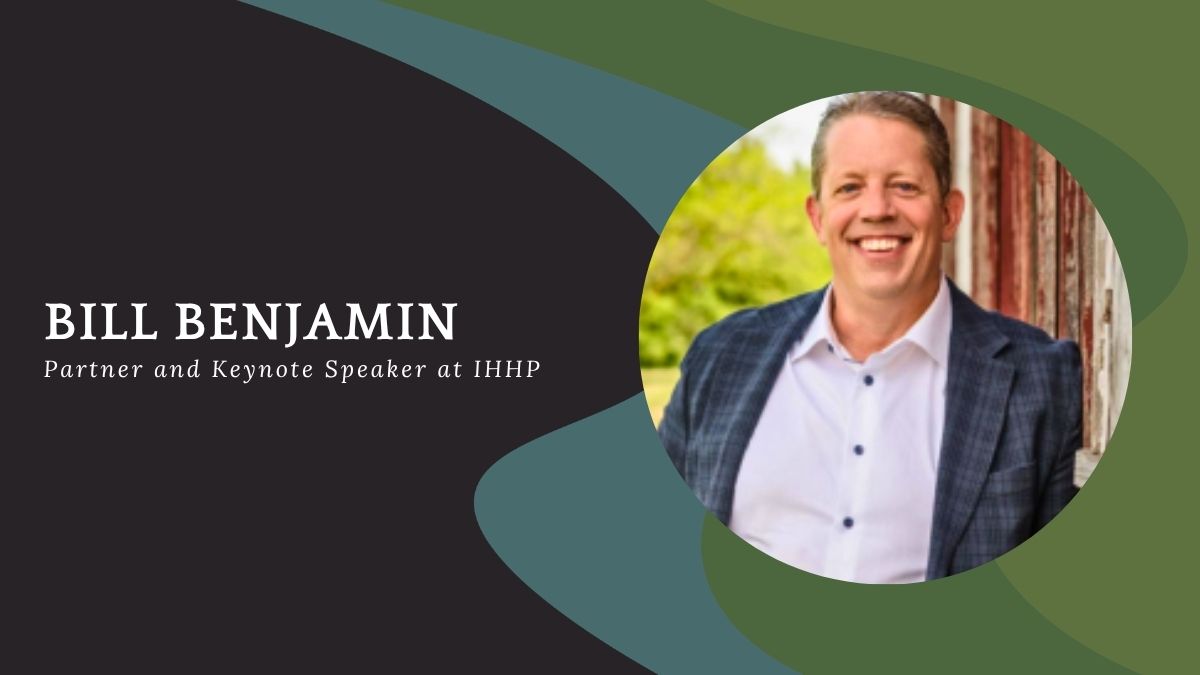
Talking to the Experts: Bill Benjamin Walks Us Through the Many Facets of AI Adoption
Bill Benjamin, Partner and Keynote Speaker at IHHP, has spent years looking closely at what it takes to perform at the top of your game. A former technology executive, leadership and culture expert, and contributor to the New York Times bestseller Performing Under Pressure, Bill takes a very practical and inspiring approach to the topics of high-performance culture, change, leadership, and emotional intelligence.
Combining a degree in Mathematics with a background in technology and sales, Bill has spent years building real-world insights that have helped audiences across the U.S. Marines, NASA engineers, as well as leadership and sales teams at Amazon, Coca-Cola, and the Mayo Clinic.
Talking to us about AI burnout, workplace readiness, and some of the challenges that await us in the adoption of this tech, Bill Benjamin shed some light on what it means to think more critically about AI.
The HR Digest: Employers and employees seem to agree that AI is transforming how we work, but workers appear more cautious in their approach to the tech. Why do you think that is?
Bill Benjamin: Employees are the ones absorbing the day-to-day disruption of AI, so their caution is really about uncertainty, not resistance. We consistently see that when (any) change is rolled out without addressing the human concerns underneath it, for example, will I still be valued, will I still have a role, does my opinion matter, etc., the people brace for impact instead of leaning in. Leaders tend to see potential for efficiency gain right away; employees experience the uncertainty first, and that gap is what creates the caution.
The HR Digest: Many employers appear more focused on the gains AI affords rather than pausing to address the concerns, such as burnout. Is this a sustainable strategy?
Bill Benjamin: No. Reports of productivity gains are coming under significant scrutiny. In fact, many of the most vocal advocates and implementers of large-scale AI implementations have done a 180 and rescinded earlier decisions. There are legitimate “gains” to be made from AI, but there is also a risk that those gains come at the cost of unaddressed burnout that will erode over time through disengagement, mistakes, and attrition, quietly canceling out the efficiency AI was supposed to deliver.
The HR Digest: What are some of the consequences employers might face if they do not account for these hidden costs of AI in their strategy?
Bill Benjamin: The hidden costs show up as attrition of your best people, quiet quitting, more sick days, and an erosion of trust in leadership that is hard to rebuild once it is gone. When employees conclude leadership only cares about output and not about them, they stop bringing discretionary effort, care for the customer, and creative problem-solving to work, which are exactly the human contributions AI cannot replace. Ironically, these human factors impact the deployment of an organization’s strategy or, more specifically, how quickly that strategy gets deployed. With much of AI being touted as a business accelerant, doing this poorly has exactly the opposite effect.
The HR Digest: What roles does communication have to play in how well an organization can integrate artificial intelligence into its operations?
Bill Benjamin: Communication, particularly the empathetic listening aspect of communication, is the difference between AI feeling like something done to employees versus something done with them. The most effective leaders communicate early, often, and honestly about what is changing and why, and they create psychological safety so employees can raise hard questions and concerns without it feeling risky to do so.
The HR Digest: With the number of layoffs that have been linked to AI, employees are wary about how this AI integration may ultimately replace them. Is this a legitimate fear? What can employers do to address it?
Bill Benjamin: Yes, in many cases, the fear is grounded in something real, and dismissing it outright just pushes it down, where it can fester as anxiety and disengagement. Employers can address it by being transparent about roles, involving employees in shaping how AI is applied to their own roles, and pairing any workforce changes with a genuine plan for upskilling and support. Leaders should also acknowledge their own uncertainty about something evolving as quickly as AI. Acknowledging that they are also learning daily is exactly the type of leadership humility that builds trust in these uncertain times.
The HR Digest: IHHP’s “Last 8%” moment is a very interesting concept in workplace management and the general observations of human behavior. How does it tie into the decision-making around AI today?
Bill Benjamin: The Last 8% is the part of any hard conversation or decision people avoid because it feels emotionally risky, and AI decisions are full of those moments: telling a team their roles will change, admitting leadership doesn’t have every answer, or asking an employee how they are really coping with the added workload. Organizations that lean into that discomfort instead of sidestepping it are the ones that build the trust needed for AI adoption to actually stick.
The HR Digest: What are some of the ways in which employers can actively improve their AI integration strategy?
Bill Benjamin: Build feedback loops so employees can flag where AI is adding to their workload rather than easing it, and treat that feedback as useful data rather than a complaint. Leaders can find ways to empower, or give voice to, those employees who have a knack for this new technology and are early or avid adopters. Some organizations deploy “reverse mentoring” where young employees mentor more seasoned ones.
Pair every technology rollout with a communication and emotional-intelligence plan, not just a training plan, and equip managers with the skills to have the direct, Last 8% conversations that AI change requires.
The HR Digest: In the age of AI, we believe that human skills and connections are more important than ever. Do you think emotional intelligence and empathy could play a role in guiding decision-making today?
Bill Benjamin: Absolutely. As AI takes over more routine tasks, the skills that differentiate great leaders and teams become increasingly human ones, such as empathy, self-awareness, and the courage to have hard conversations and make tough decisions. Emotional intelligence and empathy are what allow a leader to read what employees aren’t saying out loud, create safety for them to voice their fears, and respond to the real concern underneath the words.
My advice is simple: don’t let the AI conversation become only a technology conversation. Build in the emotional intelligence and communication skills to have the Last 8% conversations about fear, workload, burnout, and trust, because the organizations that do this well will get far more out of AI than those chasing efficiency alone.
Subscribe to The HR Digest for more insights from experts on the world of employment, and the many small ways that technology is changing how we operate and expand beyond its borders today.
