



A lot is often said and debated over when it comes to gender roles, but workplaces often reinforce ideas of predefined responsibilities. Employees who operate in a workspace not only bring in their skills and ideals to their work, but they also operate under the expectations and stereotypes that have been allocated to them. Men and women both contribute to the workplace in equal measure, offering their specific skill sets to aid the organization along on its journey. While this is undoubtedly a good thing, the nature of their voluntary contributions can take on very different forms.
New research from the Institute for Strategy and Management Accounting at the Vienna University of Economics and Business puts these differences into more consumable data by first exploring workplace volunteering. A recent study into Organizational Citizenship Behavior (OCB), which is the tendency among employees to voluntarily go “above and beyond” their defined job responsibilities, revealed some fascinating data on workplace dynamics.
Discussing these gender dynamics in the workplace is never easy, as these conversations can often bring up strong emotions among men and women equally. These, however, are essential discussions nonetheless. While we expect some initial hesitation at the prospect of broaching the unique variations in workplace behavior, diving deeper into these differentiators can have a groundbreaking impact on workplace operations.

Beyond titles and pre-set roles, men and women often find themselves volunteering for work differently, and this distinction can have lasting effects on their careers. (Image: Freepik)
Understanding Organizational Citizenship Behavior and the Relevance of Voluntary Work
Every employee is typically hired for a specific purpose, for example, to promote the business, to write code, to interact with customers, or to manage the work of other employees. The various job titles that employees adopt define their core roles, but most workers operate beyond these defined identities, taking on more menial but essential tasks day-to-day.
A team of software developers may be equally involved in working on the software, but some bring attention to the errors and strategies for perfecting a workflow. Others take it upon themselves to check in with clients for clarity to better understand the brief. Some others also manage to plan a work anniversary celebration for a colleague amidst their other routine tasks. There are many ways that organizational behavior is shaped by the needs of the moment.
Professor Isabella Grabner, one of the researchers on the team that published the paper on “Promoting Organizational Citizenship Behavior (OCB): Unintended Gender Disparities in the Participation and Evaluation of Different Types of OCB,” took a moment to help us understand the nature of this additional work, breaking it down into two distinct categories.
She explained that one form of workplace volunteering can be defined as “office glamor” or agentic OCB, which is centered on more visible tasks that draw attention to their completion. The other, “office housework” or communal OCB, took the shape of tasks that helped build culture and harmony, but often without active acknowledgement.
Office glamour could be interpreted as career-accelerating extra work, aligning with traits like assertiveness, strategic thinking, visibility, and influence:
- Leading a high-profile transformation project
- Volunteering to present to senior leadership
- Driving a new strategy or innovation initiative
- Taking charge of a cross-functional task force
- Representing the company in external partnerships or at industry forums
Office housework centered on tasks of interpersonal or cultural relevance, aligning with traits like helping, relationship-building, and community support:
- Organizing team events or celebrations
- Mentoring new hires
- Supporting colleagues emotionally or operationally
- Planning off-sites or internal initiatives
- Leading diversity, culture, or volunteering programs
- Taking notes, coordinating meetings, and onboarding others
Why Does This Distinction Between Office Glamour and Office Housework Matter?
Among the many findings of the study, the data showed that when it came to taking on additional duties, men were 30% more likely to take on visible and strategic additional work, or “office glamour” work. Meanwhile, women were twice as likely as men to involve themselves in “office housework,” which essentially revolved around team support and team-building tasks considered crucial for a positive workplace culture.
All of these tasks are critical for workplace operations, but when one segment of the workforce is more typically inclined towards invisible work, they often get left behind in their careers, even if the tasks they perform help the growth of the organization overall. The study also found that while all employees received additional recognition for breaking the mold and working on things that went against typical gender stereotypes, men received considerably more recognition for taking on office housework than women did.
There are many reasons why this data is important. Recent reports have shown us that there has been a mass exodus of women from the job market. Whether due to rising financial pressures or caregiving duties, many women are leaving the workforce, despite their talent, experience, and ambitions to succeed. We’ve also seen reports suggesting that women are disproportionately affected by the rise of artificial intelligence, as many work in the roles that are being eliminated by the technology today.
Such changes suggest that women in the workplace remain at a disadvantage, and their struggles are not solely their own. Whether to preserve their natural roles and contribution to the workplace or to make the most of the talent they possess when they break out of the stereotypical molds that they operate under, there is a significant advantage in supporting them in the workplace alongside their male counterparts.
Leaning Into Insights on Workplace Gender Disparity From the Experts: Turning Research Into Actionable Data
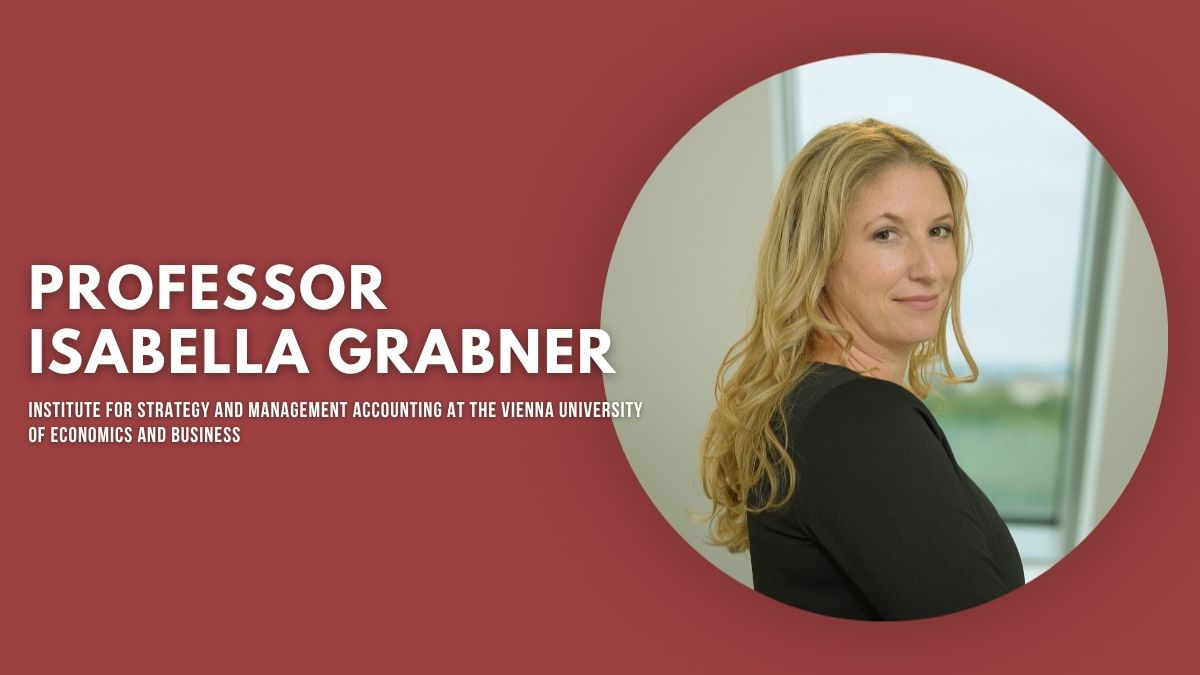
Every employee has a role to play on the job, and each one is exceedingly important. However, the reinforcement of stereotypes by validating workers for fitting into predefined slots may just be holding your organization back from reaching its full potential. Professor Isabella Grabner from the Institute for Strategy and Management Accounting at the Vienna University of Economics and Business shared her insights into these fascinating workplace dynamics and how organizations could interpret and build on the data that she brought to light with her team of experts.
With her extensive investigations into performance management and how management control systems enable effective decision-making, strategy execution, and transformation in complex organizations, she is a leading force in ongoing investigations into management innovations and what it takes to understand and adapt organizational operations today.
THRD: The study makes it clear that employees receive more recognition when they take on tasks that go against gender stereotypes, but do workers also get penalized for refusing to perform their expected roles?
Professor Isabella Grabner: This is indeed a very interesting observation. Unfortunately, our study does not directly test whether employees are penalized for refusing expected roles, such as women declining communal, team-support tasks. However, it shows that women are more likely to take on these roles, which suggests that expectations, whether internalized or externally reinforced, are shaping behavior.
At the same time, these communal contributions tend to be less visible and less career-enhancing than more strategic, agentic work. This means that even without explicit penalties, consistently saying “yes” to expected roles can create a cumulative disadvantage over time. In that sense, the pressure to be a “team player” may not be driven by the threat of direct punishment, but it can still meaningfully shape career outcomes.
THRD: Do you believe there is a correlation between high “housework” loads for women and long-term burnout or turnover rates?
Professor Isabella Grabner: Our study itself does not track burnout or turnover, so it cannot establish a direct correlation between higher “office housework” loads and those outcomes. However, it does show that women are more likely to take on communal, lower-visibility tasks that offer fewer career benefits and can divert time from advancement-oriented work. That imbalance suggests a plausible pathway: consistently carrying a heavier load of less-recognized work may lead to frustration, reduced career progression, and, over time, disengagement.
While this paper stops short of measuring burnout or exits, its findings align with broader research showing that unequal task allocation can contribute to strain and dissatisfaction. In practice, organizations should treat uneven “housework” distribution as a potential retention risk, even if the causal link is indirect.
For completeness, there is one study I know on Office Housework, Burnout, and Promotion: Does Gender Matter? by Jang, Allen, and Regina, showing that contrary to the often-heard claim, they documented no significant relationship between office housework and burnout. But this might be setting specific.
THRD: Organizations often tend to relegate “office housework” to a nice-to-have benefit rather than acknowledge how critical those who perform these roles are. Should we be placing a greater emphasis on publicizing these tasks so those who perform them don’t have to forego visibility in the workplace?
Professor Isabella Grabner: Yes, this is exactly the right instinct, because awareness is the first step toward change. When you start talking about “office housework,” many women immediately recognize themselves in it, while many men only notice it once it’s pointed out—that alone shows how invisible these patterns can be. So organizations should absolutely do more to surface and publicize these contributions, both to highlight how essential they are to team stability and to make visible who has been quietly carrying them for years.
That said, visibility by itself isn’t enough if these tasks are still treated as “nice-to-have” rather than career-relevant. The evidence shows that this kind of communal work, while critical, tends to be less rewarded than more strategic, high-profile contributions. So the goal shouldn’t just be to recognize it publicly, but to elevate its value and ensure it counts in evaluations and career progression.
In other words, raising awareness is powerful, but it needs to lead to real changes in how this work is valued and shared.
THRD: For our HR readers, how can they help managers objectively categorize work into “glamor” vs “housework” during the planning phase of a project to ensure the work distribution is more balanced?
What comes to mind is looking at this from a strategic project and task design perspective. HR can help managers get ahead of the issue by making all work visible before it’s assigned: mapping out both the high-visibility, career-building tasks and the behind-the-scenes support work. From there, it’s about designing a balanced task mix, so each team member gets exposure to both types rather than the same people repeatedly picking up the invisible work.
For recurring “housework,” simple mechanisms like rotation can prevent it from defaulting to certain individuals. Ultimately, the key is to embed this thinking into project design upfront, because fairness isn’t created at the end of a project, but in how the work is structured from the start.
THRD: With the conversation around DEI today, efforts to support or raise awareness for a specific section of the population can be misread as preferential treatment. How do you suggest employers and HR teams break past these reservations in order to actively encourage women into strategic work?
Professor Isabella Grabner: This is a very real tension right now, and it’s important to address it directly and transparently. First, creating an equitable work environment does not mean disadvantaging men or artificially advantaging women; it means ensuring that opportunities are distributed fairly.
In practice, this can sometimes feel like a loss to those who previously had easier access to high-visibility or strategic work, but what is being “lost” are unearned advantages, not earned opportunities. Framing the conversation this way helps shift it from “preferential treatment” to removing hidden imbalances.
Second, organizations often say they want merit-based systems, and that’s absolutely the goal. But the reality is that what we consider “merit” or “performance” is not always as objective as we think, especially when it comes to loosely defined, subjective contributions like “going above and beyond”. That’s exactly where biases can creep in. So the focus shouldn’t just be on rewarding merit, but on making sure everyone has equal access to the kinds of opportunities that allow them to demonstrate merit in the first place.
For HR teams, the most effective approach is to focus on the fairness of access, not outcomes and quotas, make processes transparent, for example, how strategic projects are staffed, and design systems that distribute opportunities more evenly, rather than relying on informal volunteering or networks
And finally, awareness really is key. As I have seen in my own conversations, many people simply haven’t noticed these patterns until they are pointed out. The goal isn’t to assign blame, but to build a shared understanding that allows organizations to improve how work is allocated and recognized.
THRD: We’d love to hear any final thoughts on the results of this study and why you believe these findings are essential in updating how the modern workforce operates today.
Professor Isabella Grabner: A key takeaway from our study is that many of the gender gaps we talk about—promotion, pay, leadership—don’t suddenly appear later in careers; they are built much earlier through everyday work design and evaluation systems. What we show is that the way organizations structure performance management, allocate tasks, and reward “above and beyond” contributions can start shaping gender inequalities from day one. Small, seemingly neutral differences in who takes on which types of work, and how that work is valued, accumulate over time into much larger disparities.
For the modern workforce, this is especially important. Work today is increasingly collaborative, project-based, and reliant on informal contributions that sit outside formal job descriptions. That makes it even easier for invisible patterns, like who does the high-visibility work versus the support work, to go unnoticed but still drive career outcomes. At the same time, organizations are placing more emphasis on culture, teamwork, and employee experience, which makes “office housework” more essential than ever, but not always more rewarded.
The implication is that organizations need to move beyond simply tracking outcomes and start re-examining how work itself is designed, distributed, and evaluated in real time. If we want a more equitable workplace, we can’t just fix the gaps at the top: we have to pay attention to the everyday decisions that quietly shape careers from the very beginning.
Subscribe to The HR Digest for more industry-defining insights from the experts redefining success in HR and management operations.
