



Among the many changes to employment law this year, minimum wage increases are underway in 2026. Many states have already enforced the hikes in their minimum wage policy at the start of the year, but a few more changes went into effect this month as well. Changes to the minimum wage are equally critical for employers and employees, setting measures in place to ensure that workers operating minimum wage are fairly compensated for their labor. While the federal minimum wage has stagnated at $7.25 per hour under the Fair Labor Standards Act (FLSA) since 2009, many states have enacted their own regulations to adjust for inflation and the rising cost of living. Alaska, Oregon, and Washington, DC, were the most recent regions to see the minimum wage in July 2026, and employers need to adjust their payrolls accordingly.

If you aren’t caught up with the state minimum wage rate increases that went into effect on July 1, 2026, here’s your chance to catch up. (Image: Pexels)
US Minimum Wage Increase That Just Went Into Effect in July 2026
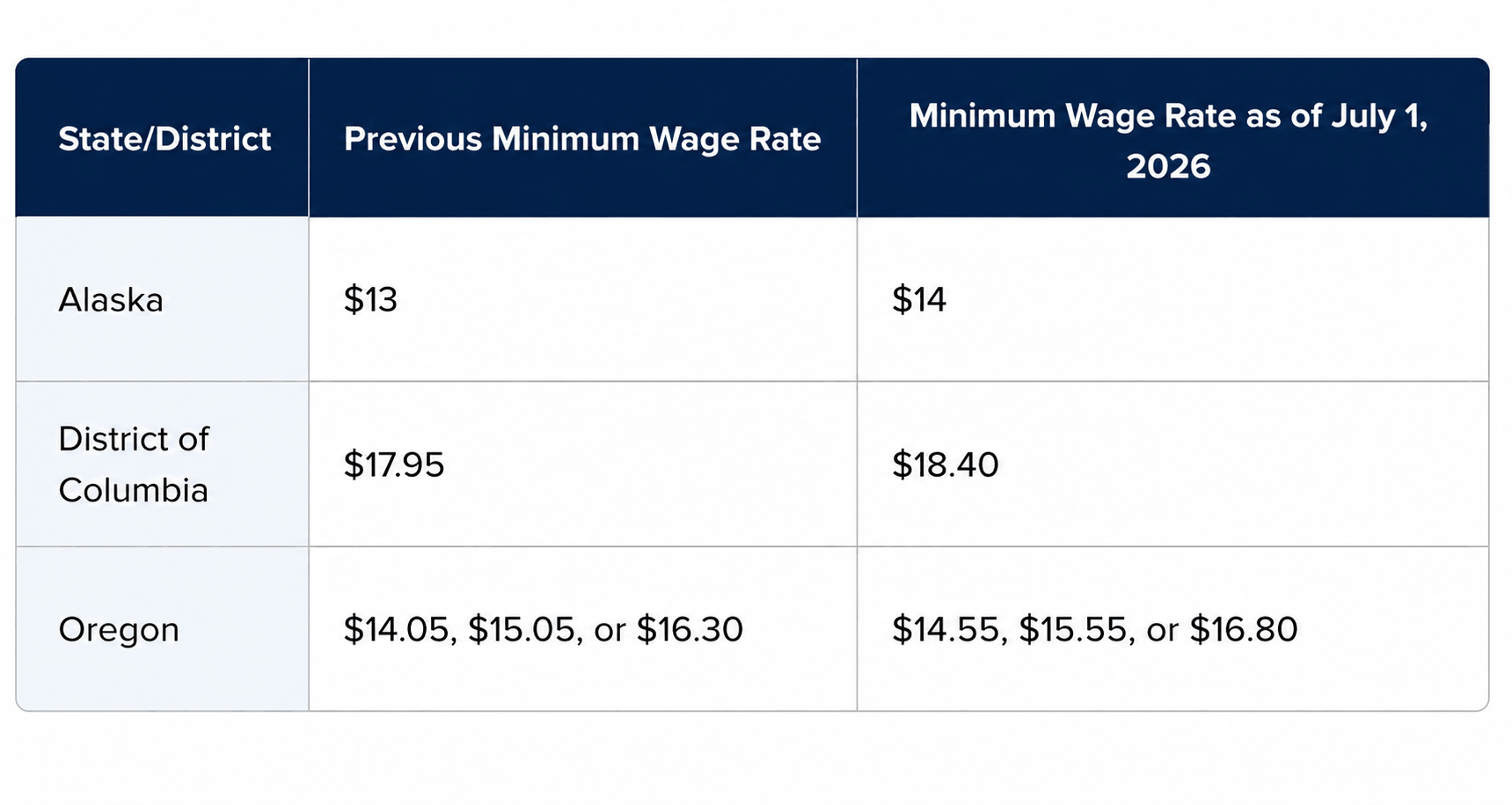
The state or district minimum wage for three regions was updated as of July 1, 2026, specifically in Alaska, the District of Columbia, and Oregon. While the hike in minimum wage is more straightforward in the first two regions, those in Oregon are a little more complex.
Why Does Oregon’s Minimum Wage Increase Look Different?
The minimum wage in Oregon went up on July 1, 2026, but there are different wage rates for different regions within the state. The different divisions apply to non-urban counties, the general/standard regions, and the Portland metro. Employers with a fixed location are expected to pay an employee at least the regional rate that is applied within that area if the employee works there for at least 50% of the pay period.
Those employees who do not work within the fixed location for at least 50% of the pay period should be, at a minimum, paid the rate that is applicable in the region where their work is actually performed.
California Enacted an Industry-Specific Minimum Wage Increase on July 1, 2026
As of January 1, 2026, the minimum wage statewide went up from $16.50 per hour to $16.90 per hour for all workers, except for fast food restaurant workers and healthcare workers. Workers in 11 cities in California have a slightly higher minimum wage, for example, $17.76 per hour in Alameda, $19.61 per hour in Berkeley, and $20.34 per hour in Emeryville. The minimum salary for exempt workers in the state also went up to $70,304 annually, or $5,858.67 monthly.
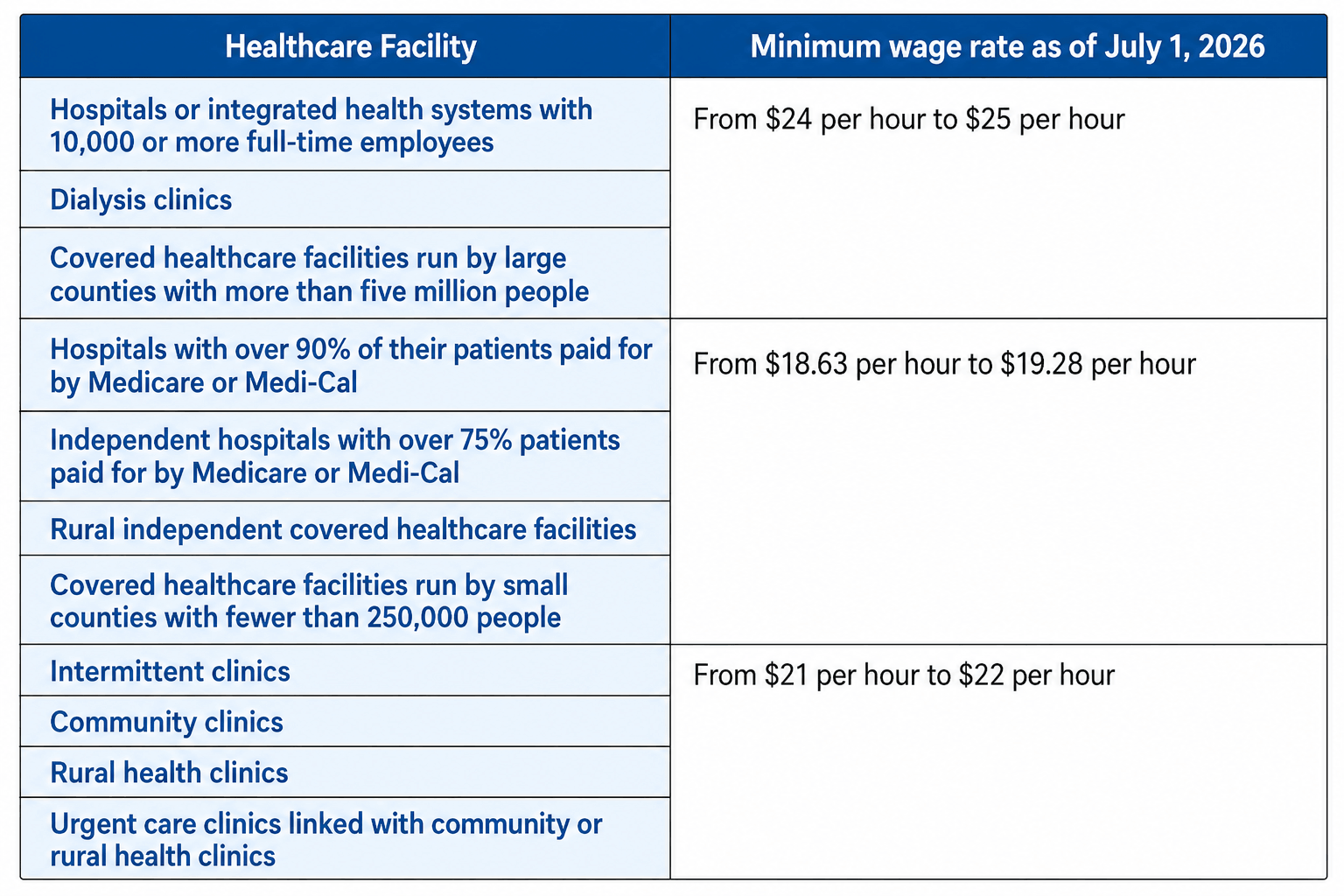
California is known for updating its employment regulations to ensure that workers are fairly compensated for their work on the job. The $20 per hour minimum wage hike for fast food workers was particularly controversial when it was established in 2024, but matters have since calmed down. A similar effort has been made for healthcare workers, with different divisions seeing a hike in wages following an earlier round of hikes.
The changes to wages below apply to all employees working for a covered health care facility, and are not exclusive to doctors and nurses.
State Minimum Wage Changes Occurring Later in 2026
The July 2026 minimum wage increases are not the only changes scheduled for the year. On September 30, 2026, Florida’s hourly minimum wage rate will go up from $14 per hour to $15 per hour. This is according to a state constitutional amendment approved in 2020 that gradually increased the wage rate.
Keeping up With Minimum Wage Increases is Essential While Managing a Workforce
The state minimum wage increases in 2026 are significant for employers to note, as there are various adjustments that they need to make to accommodate the change. The most obvious one is to ensure that they apply the right regulation when multiple wage rates may be applicable. It is essential to assess whether workers are being compensated fairly and to make the necessary adjustments to calculations and stay on track with payments. Employers can choose to increase the wage to more than the proposed rate as well, particularly when employees are already earning the new minimum wage rate.
Employers may also be required by state and local laws to notify the employees with regard to the changes, whether directly while paying the wages, or through a poster or notice within the workplace. Such adjustments may look minor on paper, but failing to comply can cause problems that are best avoided.
Subscribe to The HR Digest for more insights on workplace trends, layoffs, and what to expect with the advent of AI.
